
In March 2020, the Philippines went into lockdown. Borders closed. Flights stopped. The dive shop shut. For the first time since we opened in 2004, Malapascua went quiet.
Really quiet.
For an island that runs on tourism, it was brutal. No guests meant no income. Not just for us, but for every guesthouse, restaurant, boat operator, and guide on the island. The entire economy of Malapascua depends on people getting on planes and coming here. When that stopped, everything stopped.
WHAT HAPPENED DURING THE SHUTDOWN
The Philippines had some of the longest and strictest Covid lockdowns in the world. International borders were effectively closed for nearly two years. Domestic travel was restricted, reopened, restricted again. It was a mess.
On Malapascua, the locals went back to fishing. Some of our staff found temporary work on the mainland. Others stayed on the island, waiting. The resorts sat empty. The dive boats sat beached. The compressors went silent.
But the ocean didn’t stop.
THE REEFS BOUNCED BACK
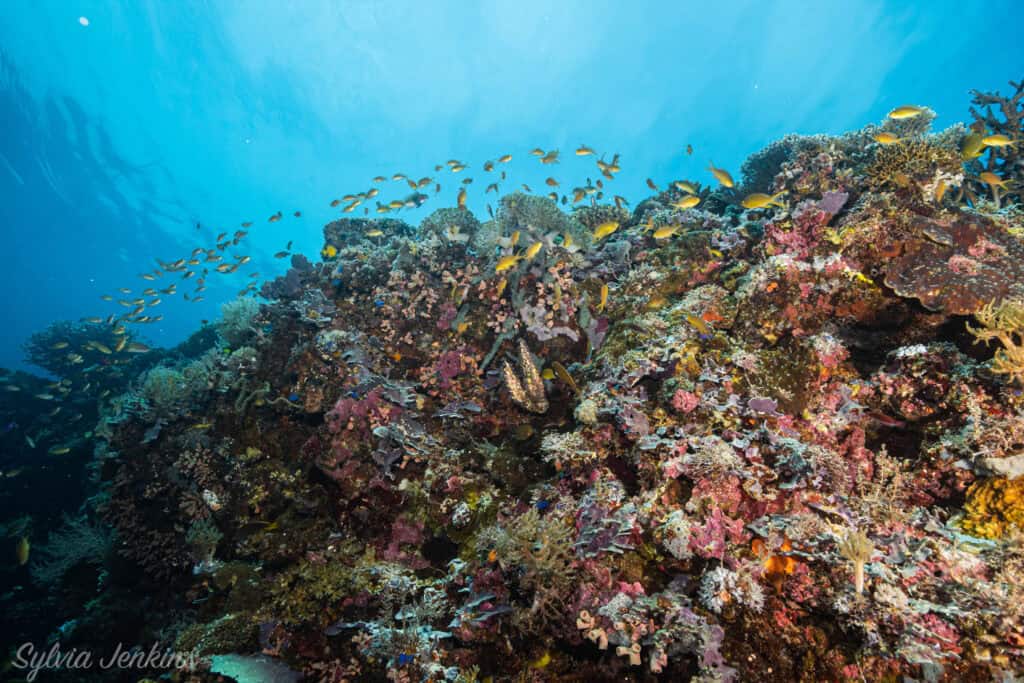
Here’s the unexpected upside of a global pandemic shutting down tourism for two years: the reefs got a holiday. No dive boats, no fin kicks, no anchor damage, no sunscreen, no noise. Just ocean, doing its thing.
When we got back in the water, the difference was visible. Coral that had been struggling was growing. Fish populations were up. The house reef looked healthier than it had in years. Gato Island was stunning. The marine sanctuary had clearly benefited from the absence of daily visitors.
The thresher sharks, of course, were completely unbothered by the whole situation. They kept visiting the cleaning station every morning throughout the pandemic, performing for an audience of zero. Which tells you everything you need to know about thresher sharks and their opinion of humans.
REOPENING
The Philippines reopened to international tourists in stages through 2021 and into 2022. Each stage brought new rules, new requirements, new confusion. Testing, quarantine, vaccination certificates, travel passes, QR codes. It was a lot.
But people came. First a trickle, then a steady flow. Returning guests who’d been waiting for two years to get back. New divers who’d spent lockdown watching YouTube videos and deciding that learning to dive was going on the bucket list. Families who just needed a beach and some peace.
WHAT’S DIFFERENT NOW
We used the downtime. Equipment was serviced, upgraded, and replaced. The dive shop was refreshed. We reviewed our operations, our courses, our environmental practices. When you’re forced to stop, you get a chance to think about how you want to restart.
The biggest change came later, in 2022, and it had nothing to do with Covid. The thresher sharks moved to a new site. But that’s another story.
For now: we’re back, the reefs are thriving, and Malapascua is as good as we’ve ever seen it. If you’ve been putting off that dive trip, the excuses have officially run out.