

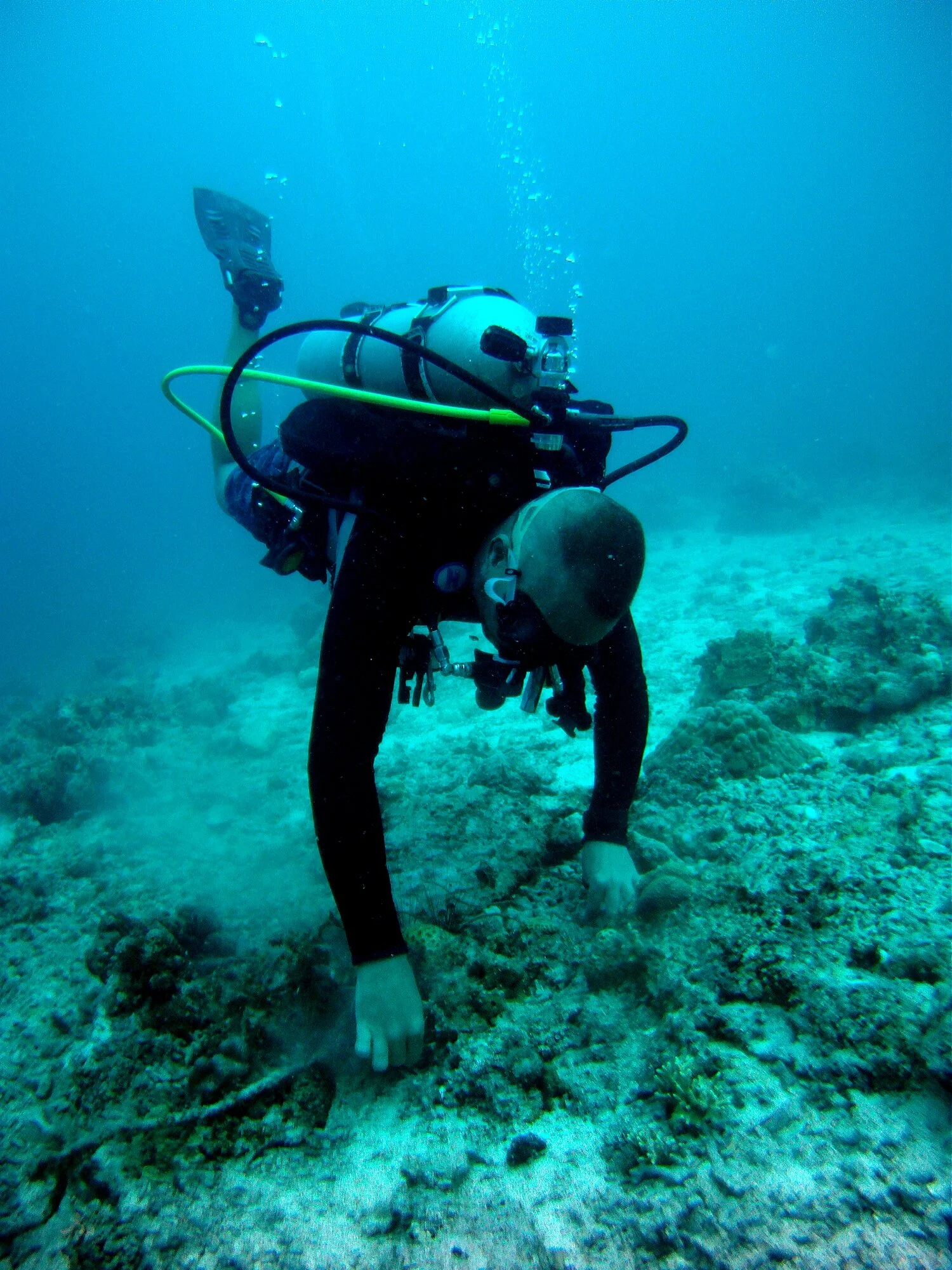
All your questions about diving around Malapascua Island answered here
Malapascua Island, Philippines, is the only place in the world where divers reliably see thresher sharks every single day. Since 2004, Thresher Shark Divers has operated daily dawn dives to these ancient sharks at their cleaning stations. In 2022, the sharks moved from Kimud Shoal to nearby Kimud Shoal, creating even better conditions: shallower (12-metre plateau, 18–22 metres at the cleaning station), brighter light, and closer encounters. Sightings have been the best in the dive shop’s 20+ year history. Beyond the thresher sharks, Malapascua delivers tiger sharks (seen on 10–20% of dives), the famous Gato Island tunnel with resident whitetips, world-class macro including frogfish and seahorses, stunning walls, wrecks, and exceptional night diving. With 20+ dive sites, PADI training from beginner to instructor level, and year-round diving, Malapascua is the world’s most reliable destination for shark diving and tropical reef exploration combined.
Malapascua Diving at a Glance
| Location | Malapascua Island, Cebu, Philippines |
| Known for | Only place in the world with daily thresher shark sightings |
| Thresher shark depth | 12-metre plateau, 18–22 metres at cleaning station (Kimud Shoal) — Open Water certified divers welcome |
| Tiger shark sightings | 10–20% of dives at Kimud Shoal |
| Total dive sites | 20+ named sites (sharks, walls, wrecks, macro, night dives) |
| Water temperature | 26–29°C March-Dec, 24-26°C Jan-Feb |
| Visibility | 15–30+ metres depending on site and season |
| Certification required | PADI Open Water minimum (try dives and beginner courses available on-island) |
| Best time to visit | Year-round. Thresher sharks visible every day, all year |
| Travel from Cebu airport | 3–4 hours by car to Maya Port, then 30-minute boat |
| Dive shop | Thresher Shark Divers — PADI 5-Star CDC, est. 2004, 20+ years zero serious accidents |
What’s in this guide
- Thresher Sharks: The Signature Experience
- Tiger Sharks & Kimud Shoal
- Gato Island: The Tunnel Dive
- Macro Diving & Marine Life
- Dive Sites Overview (20+)
- vs Other Philippines Destinations
- vs World’s Best Shark Diving
- A Typical Dive Day
- PADI Courses & Certifications
- Why Thresher Shark Divers?
- Getting to Malapascua
- Where to Stay
- Best Time to Dive
- Frequently Asked Questions
Why Malapascua Is the Premier Dive Destination
Malapascua Island, located off the north coast of Cebu in the Philippines, has earned its reputation as one of the world’s most remarkable dive destinations – not because of hype, but because of the huge diversity of marine life and consistent access to shark encounters that are impossible anywhere else.
The island sits in the Visayan Sea, a rich marine corridor where pelagic sharks, schooling fish, and unique macro life converge. Small enough to explore fully in a week, yet deep enough in marine biodiversity that Divemasters who have done thousands of dives routinely discover new species or rare behavioural moments during their visit, Malapascua appeals to everyone from newly certified divers to technical wreck specialists.
The year-round tropical climate means consistent water conditions. Visibility ranges from 15-30+ meters depending on site and season. Water temperature stays warm at 26-29°C year-round, though it gets a little cooler from December to February, requiring only a 3mm wetsuit in cooler months and often just a rash guard in peak warmth. Calm mornings allow reliable boat access to offshore sites, and the island is far enough from major shipping lanes to remain quiet and undisturbed.
Thresher Sharks: The Signature Experience
Why Malapascua Is Unique
Malapascua is the only place on Earth where divers reliably encounter pelagic thresher sharks every single day. Dives depart at dawn to Kimud Shoal, where sharks visit cleaning stations at just 12 metres depth. Sightings are as good as guaranteed, making this one of the most reliable non-feeding shark dives in the world.
Thresher sharks (Alopias species) are deep-water pelagic sharks found throughout the world’s oceans at depths of 200+ meters. Yet they make a critical upward migration each morning to shallow cleaning stations where smaller fish remove parasites from their skin.
Since before we know when, local fishermen noticed thresher sharks at Kimud Shoal. Thresher Shark Divers, founded in 2004, began exploring these sites and documented the phenomenon: threshers would arrive in small groups around sunrise, hang at a specific depth for up to 30 minutes while being cleaned, then return to the depths.
The Kimud Shoal Shift (2022)
For years, threshers gathered at Kimud Shoal (16-25 meters depth). In 2022, the sharks shifted to nearby Kimud Shoal, a shallower cleaning station at just 12 meters. This change delivered unexpected benefits for divers:
- Shallower depth: 12-22 meters versus 16-25 meters means beginners can participate safely, longer bottom times (60 minutes), and less nitrogen narcosis for comfortable observation.
- Brighter light: Thresher sharks move gracefully in circles or figures of eight around the cleaning stations, making recognisable silhouettes at shallow depths. Morning sun illuminates their distinctive faces and long tail fins, making identification and photography spectacular.
- Closer encounters: At the Kimud cleaning station, sharks often approach divers without aggressive intent, uncaring about their presence rather than threatening. The sharks can come so close that every detail is visible – huge eyes, skin texture, fin movements.
- Extended bottom time: Longer time at depth allows for the observation of these graceful sharks as they have their morning “carwash for fish.”
Thresher sharks are ovoviviparous (they give live birth). They hunt using their distinctive elongated tail fin—up to 2 meters long on some specimens—to stun and herd schools of fish. Despite their fearsome appearance and size (adults 4 meters), threshers are curious but docile around divers. At Malapascua, aggression is nonexistent.
Dive Details & Certification Requirements
Location: Kimud Shoal, approximately 60 minutes by boat from Thresher Shark Divers’ shop.
Depth: 12-metre plateau; cleaning station at 18–22 metres (60–72 feet). Open Water divers can participate with instructor supervision.
Duration: 45-60 minute dives. Departures are between 5am and 8am depending on weather and schedule, and include a 60-minute boat journey to Kimud Shoal, with sharks typically seen at the cleaning station during the morning. A 2-dive trip takes 5 hours, a 3-dive trip takes 7 hours.
Certification required: PADI Open Water minimum. If you’re not yet certified, you can obtain Open Water on Malapascua in 2.5-3 days, then dive with threshers immediately.
Open Water divers: Can participate with an instructor for safety and supervision. The instructor ensures proper buoyancy, navigation, and safety protocols while you observe the sharks.
Advanced Open Water divers: Can join group dives led by a divemaster, typically limited to 4 divers per divemaster for safety and quality of experience.
Tiger Sharks & Kimud Shoal Pelagics
While thresher sharks are the headline, Kimud Shoal delivers a second tier of pelagic encounters that would be a career highlight at most dive destinations—but is simply another day’s dive at Malapascua.
Tiger sharks are the primary draw at Kimud Shoal, seen on approximately 10–20% of dives at that site depending on season and sea conditions. Tiger sharks are large predators (3-5 meters) with distinctive vertical stripes (hence the name), recognizable flat snouts, and highly efficient hunting behavior. At Kimud, they cruise the shoal searching for food, often unaware of divers or passing in distant indifference.
Kimud Shoal also hosts:
- Whitetip reef sharks: Regular sightings, often resting on the sand or patrolling the reef edge.
- Rays: Devil rays and eagle rays are seen seasonally, occasionally in groups during migration periods.
- Tuna and jacks: Schooling fish in high-speed feeding events, sometimes driven by sharks hunting.
- Hammerheads: Very occasionally seen, particularly in certain seasons with their distinctive head shape. But don’t come expecting them.
Depth at Kimud Shoal: 16-25 meters. Recommended for Advanced Open Water certified divers or experienced Open Water divers with strong buoyancy skills.
Duration: 40-50 minute dives. Kimud is reachable within 20 minutes of the dive shop, allowing flexible scheduling.
Gato Island: The Iconic Tunnel Dive
“You come for the thresher sharks, but you leave remembering Gato.” This saying was coined by TSD’s owner, Andrea, not so long after she arrived on Malapascua in 2003, and it still holds true; it reflects the disproportionate impact Gato Island has on many divers’ visits to Malapascua.
Gato Island is a small island with several intersecting dive sites. It has a submerged limestone formation with a remarkable geological feature: a shallow natural underwater tunnel that runs under the island at approximately 10 meters depth. Entering this tunnel, passing through complete darkness with only a flashlight, and exiting on the far side is an experience that combines geology, engineering-like problem-solving, and underwater excitement, especially if you see whitetip sharks circling at the exit!
It’s not for everyone, but that’s fine because outside the tunnel is where Gato excels; it has stunning coral, more whiteips hiding under rocks, and world-class macro.
Gato Island Dive Details
The Tunnel: Approximately 10-15 meters long, wide enough for single-file passage, with potential low-ceiling areas requiring body awareness. The tunnel is home to a permanent population of whitetip reef sharks (typically 2-4 visible on any dive), plus large groupers and moray eels.
Certification requirement: Advanced Open Water is recommended due to the overhead environment (enclosed space, limited exit routes). Very experienced Open Water divers may participate with strict instructor supervision, though this is less common.
Depth: 8 meters at the tunnel entrance; walls extend to 25 meters. Allow extra bottom time and manage nitrogen loading carefully.
Surrounding area: Pygmy seahorses, nudibranchs, frogfish, and dense coral gardens inhabit the surrounding walls. Divers typically complete a tunnel transit at the start of their dive and then explore the perimeter for macro opportunities.
Duration: 50-60 minute dives. Gato trips can be on the same day as other sites (Kimud Shoal trip in the morning, Gato trip in the afternoon) with advance booking, giving you both iconic shark encounters and this unforgettable geological feature in a single day.
Macro Diving & Smaller Marine Life
Beyond sharks and tunnel dives, Malapascua excels at macro-scale diving: close encounters with small, specialized, often bizarre creatures that require low-light viewing, macro photography lenses, or simply patient observation.
Signature Macro Species
| Species | Where Found | Best Season/Time |
|---|---|---|
| Frogfish (various species including painted, warty, raggedtooth) | Scattered macro sites around the island, reef edges, mixed substrates | Year-round; morning dives best |
| Seahorses (pygmy, seaweed, lined seahorses) | Gato Island, coral gardens, seagrass patches | Year-round; common at Gato |
| Mandarin fish (Synchiropus splendidus) | Sandy areas and rubble zones near Malapascua | Year-round; dusk dives offer mating displays |
| Ghost pipefish (various species) | Open sand, seagrass, coral rubble | Year-round; well-camouflaged, requires patience |
| Nudibranchs (Spanish dancers, blue dragons, many others) | All reef types, particularly Gato and coral gardens | Year-round; more active during wet season |
| Moray eels (spotted, ribbon, giant) | Reef crevices, rubble, Gato tunnel area | Year-round; most active at dusk/night |
| Reef squid | Open water, reef edges, occasionally sandy areas | Year-round; excellent camouflage displays |
Night dives and dusk dives are particularly rewarding on Malapascua. Many creatures shift behaviour at low light: mandarin fish emerge for mating displays, eels become more active, bioluminescent organisms create unexpected light shows, and nocturnal species become visible. TSD offers dusk and night dives daily, and these are some of the most memorable experiences available.
Dive Sites Overview: 20+ Named Locations
Beyond Kimud, Kimud, and Gato, Malapascua offers a remarkable diversity of dive sites that allow a week-long or longer visit to feel like a new island each day.
Primary Dive Site Categories
Pelagic Zones (offshore): Kimud Shoal, Kimud Shoal—threshers, tigers, whitetips, large ray species.
Reefs & Walls: Cathedral, Coral Garden—walls, soft coral gardens, schooling fish, large groupers, rays in deeper sections.
Wreck & Shallow Sites: Lighthouse Point—a shallow WWII wreck just 5 minutes from the dive shop, excellent for beginners and home to mandarin fish at dusk.
Macro Sites: Scattered throughout shallow reefs and sand/rubble transitions—frogfish, seahorses, nudibranchs, pipefish, squid.
Wreck Dives: Several named wrecks in the surrounding area, suitable for recreational divers; more technical wreck dives available for advanced divers.
Night Dives: Selected reef and sand sites suitable for low-light exploration—nocturnal hunting, bioluminescence, octopuses, sleeping fish.
A PADI Open Water dive can access many of these sites. Advanced Open Water certification opens pelagic zones (Kimud Shoal, deeper walls) and technical sites (Gato tunnel). Specialty certifications like Nitrox, Deep Diving, and Navigation further expand your options.
How Does Malapascua Compare to Other Philippines Dive Destinations?
The Philippines has over 7,600 islands and some of the richest marine biodiversity on the planet. Several destinations compete for the title of best diving in the Philippines. Here is how Malapascua compares to the other top contenders, based on what each destination actually delivers underwater.
| Destination | Signature Experience | Shark Encounters | Cert Required | Access & Cost |
|---|---|---|---|---|
| Malapascua, Cebu | Daily thresher sharks (18–22m cleaning station), tiger sharks, Gato tunnel, 20+ sites | Daily (threshers guaranteed). Tigers 10–20% of Kimud dives | Open Water | 3–4hrs from Cebu airport. Budget to premium. Year-round |
| Tubbataha Reef, Palawan | Pristine coral, pelagics, UNESCO World Heritage site | Occasional sharks (reef sharks, hammerheads). Not guaranteed | Advanced OW recommended | Liveaboard only. March–June season only. $2,500–$4,000+ per trip |
| Moalboal, Cebu | Sardine run, sea turtles, excellent house reef | Rare. Whale sharks at Oslob (controversial feeding programme) | Open Water | 2–3hrs from Cebu airport. Budget-friendly. Year-round |
| Coron, Palawan | WWII Japanese shipwrecks, lakes, reefs | Rare. Primarily wreck and reef diving | Advanced OW for wrecks | Direct flights from Manila. Mid-range pricing. Year-round |
| Bohol (Panglao/Balicasag) | Walls, turtles, excellent macro, whale watching nearby | Occasional reef sharks. Not a shark destination | Open Water | Direct flights to Bohol. Budget to mid-range. Year-round |
| Apo Reef, Mindoro | Remote atoll, large pelagics, pristine coral | Occasional reef sharks, mantas. Seasonal | Advanced OW | Boat trip from Sablayan. Limited season. Basic facilities |
Among Philippines dive destinations, Malapascua is unique for its guaranteed daily shark encounters at accessible depths. However, it also offers a lot of variety in its dive sites, which spread in every direction around the island, each shaped by different currents, visibility, and marine life depending on their location.
Tubbataha offers pristine coral but requires a liveaboard and is limited to a three-month season. Moalboal and Bohol deliver excellent reef diving but lack consistent large marine life. Coron is a world-class wreck destination but not a shark destination. For divers whose priority is seeing sharks reliably, affordably, and without needing advanced certification, Malapascua is the clear choice in the Philippines.
How Does Malapascua Compare to the World’s Best Shark Diving?
For daily shark encounters at accessible depths, Malapascua is unmatched in the Philippines. Moalboal offers sardines and turtles, Bohol has walls and hammerheads, Coron has WWII wrecks, but no destination matches Malapascua’s combination of thresher sharks, tiger sharks, and other sharks, macro diversity, and year-round diving.
Divers planning a shark-focused trip typically consider a handful of world-famous destinations. Each has a signature species and a unique set of trade-offs around cost, accessibility, depth, season, and reliability of encounters. Here is how Malapascua stacks up against the most commonly compared alternatives.
| Destination | Signature Species | Depth | Season | Cert Required | Typical Cost (1 week) |
|---|---|---|---|---|---|
| Malapascua, Philippines | Thresher sharks (daily), tiger sharks, whitetips | 18–22m (threshers), 16–25m (tigers) | Year-round, 365 days | Open Water | $500–$1,500 |
| Galapagos, Ecuador | Hammerhead schools, whale sharks, mantas | 15–30m+, strong currents | June–Nov (hammerheads). Seasonal | Advanced OW minimum. Liveaboard expected | $4,000–$8,000+ |
| Maldives | Whale sharks, mantas, reef sharks, hammerheads | 10–30m | Whale sharks: May–Nov. Mantas: seasonal by atoll | Open Water (resort). Advanced for channels | $3,000–$7,000+ |
| South Africa (Gansbaai/Aliwal) | Great whites (historically), tiger sharks, ragged-tooth | Surface cage (whites), 15–25m (others) | Great whites declining. Seasonal for others | No cert for cage. Advanced for open-water sharks | $2,000–$4,000 |
| Fiji (Beqa Lagoon) | Bull sharks (feeding dives), tiger sharks, reef sharks | 25–30m | Year-round (bull sharks). Best: Apr–Oct | Advanced OW | $3,000–$5,000 |
| Palau, Micronesia | Grey reef sharks, mantas, WWII wrecks | 15–40m, strong currents common | Year-round. Best: Oct–Apr | Advanced OW. Drift diving experience | $3,000–$6,000 |
Most world-famous shark diving destinations require advanced certification, seasonal timing, liveaboards, or budgets above $3,000 per week. Malapascua is the only destination that combines daily guaranteed shark encounters (thresher sharks every morning, tiger sharks on 10–20% of Kimud Shoal dives), accessible depths (18–22 metres for threshers, with a 12-metre plateau), year-round availability (365 days), and budget-friendly costs (a full week of diving, accommodation, and transfers from under $1,000). For reliability, accessibility, and value, Malapascua stands alone among the world’s top shark diving destinations.
A Typical Dive Day at Malapascua
Malapascua’s dive schedule is built around thresher shark availability (dawn), ambient light (morning dives offer best visibility and photography light), and diver safety protocols (nitrogen loading, bottom time limits).
Standard Daily Schedule
5:00–8:00am: Early wake-up. Meet at Thresher Shark Divers shop for briefing. Board boat for Kimud Shoal (1-hour journey). The Kimud trip takes approximately 5 hours total.
8:00–9:00am: Local dive(s) (for divers not on the Kimud trip, or on rest days). Sites include Lighthouse Point, Cathedral, coral gardens, and nearby macro sites.
Late morning: Return from Kimud. Breakfast/lunch, equipment rinsing, rest. Optional briefing for afternoon/evening dives.
2:00pm: Afternoon dive(s) at local site (Lighthouse Point, Cathedral, coral gardens, macro site, or Gato Island). 45-60 minute dive.
5:00pm: Dusk or night dive at selected reef or sand site. 45-60 minute dive. Observe nocturnal behavior, bioluminescence, sleeping fish.
7:30pm onwards: Dive complete. Evening meal, rest, discussion of the day’s encounters.
Customization
Divers can mix and match. Some do the early Kimud trip and one additional dive. Others do Kimud plus Gato (full-day trip, return around 1pm). Some skip the early dive and focus on afternoon/evening dives and skill-building. TSD works with each diver to create a schedule that matches their certification level, fitness, and interests.
PADI Courses & Certifications on Malapascua
Why Train at Thresher Shark Divers?
Thresher Shark Divers is a PADI 5-Star Career Development Center—the highest accreditation PADI offers to dive schools. This distinction means:
- All PADI courses available: Open Water through Instructor (IDC).
- Professional-level instruction: Strict adherence to PADI standards, current training materials, and best practices. Experienced instructors of different nationalities, including Filipinos who moved up the ranks at TSD.
- Small group instruction: Maximum 4 students per class, often private courses. This dramatically improves learning speed and personalized feedback.
- Real-world training sites: Courses are taught at Malapascua’s actual dive sites—Kimud, Kimud, Gato, macro zones. You’re not just learning in a pool; you’re training in the environments where you’ll dive.
- Instructor expertise: TSD divemasters average 12-20 years tenure and 5,000-10,000+ dives each around Malapascua. They know every site intimately.
Course Offerings & Pricing
PADI Open Water Certification: 2.5-3 days. Transforms non-divers into certified recreational divers able to dive to 18 meters. Includes confined water training, open water skills sessions, and knowledge reviews. See current pricing.
PADI Advanced Open Water: 2 days. Expands depth limit to 30 meters and introduces advanced skills (navigation, deep diving, rescue awareness). Many students add a thresher shark dive as part of AOW training. See current pricing.
PADI Nitrox Specialty: 1 day. Learn to plan dives using enriched air (Nitrox), calculate nitrogen exposure, and extend bottom time. See current pricing. Free Nitrox fills for all certified nitrox divers during their stay.
PADI Rescue Diver: 2-3 days. Develop rescue and first aid skills, manage diving accidents, conduct rescues. Builds situational awareness and confidence in emergency response.
PADI Divemaster: 4-5 days. Professional-level training. Become a certified divemaster able to lead dives, conduct training, and manage dive operations.
PADI Instructor Development Course (IDC): 5-6 days. Train instructors. Full business and teaching methodology curriculum.
Specialty Courses: Deep Diving, Navigation, Underwater Photography, Shark Awareness, Underwater Naturalist, and others available on demand.
Instruction Languages
English, French, Spanish, German, Dutch, Cebuano and sometimes other languages. Multi-language capability ensures that international diving communities can train comfortably in their native or preferred language.
Why Thresher Shark Divers?
Credentials & Track Record
Founded 2004: 20+ years of continuous operation, tens of thousands of divers trained and guided, zero serious accidents. This longevity and safety record speaks to operational excellence.
Owner-operated: Andrea Agarwal, the founder, remains actively involved in operations. Andrea started TSD believing in and implementing only the highest standards, and this ethos still runs through the whole of Thresher Shark Divers today. The ownership stability ensures consistent quality control and commitment to the dive site and diver experience.
Staff tenure: Average 12-14 years with the company. High retention rates indicate good working conditions, professional development, and team cohesion. Staff expertise compounds over time, most of the Filipino Divemasters and Instructors have worked their way up from entry-level positions.
PADI 5-Star CDC: Highest accreditation available. TSD is the only PADI 5-Star CDC on Malapascua, meaning TSD meets rigorous standards for training quality, equipment maintenance, facility standards, and professional conduct.
Equipment: Apeks regulators (high-reliability breathing apparatus), Aqualung BCDs (buoyancy control devices), modern dive computers, and regular service protocols. Equipment is replaced on schedule, not when it breaks.
Insurance: Full liability insurance covering diving operations. Surprisingly rare in Southeast Asia, this coverage protects divers and the operation if accidents occur.
Awards & Recognition
TSD has received multiple awards, including annual PADI and TripAdvisor awards, “Outstanding Contribution to Dive Industry” recognitions, and runner-up “Best Overseas Dive Centre” (UK-based award), reflecting its impact on diving standards and marine conservation in the region.
Getting to Malapascua: Logistics & Transfers
Flight & Transportation Overview
Getting to Malapascua takes about 4-5 hours from Cebu airport: a 3–4 hour drive north to Maya port, then a 30-minute boat crossing. Thresher Shark Divers arranges private transfers from the airport. Night boats are not permitted after 5pm, so aim to arrive in Cebu by noon.
Step 1: International Flight
Fly into Cebu, Philippines (CEB—Mactan Cebu International Airport). Most international flights arrive from major Asian hubs (Manila, Bangkok, Kuala Lumpur, Hong Kong) or sometimes directly from Australia, Singapore, the middle east or other regional cities.
Step 2: Cebu to Maya Port
Private transfer from Cebu airport to Maya Port (northernmost coastal town in Cebu, roughly 100 km from airport, 3-4 hours by road). TSD arranges this transfer. See current transfer rates.
Step 3: Maya Port Boat to Malapascua
Public boat from Maya Port to Malapascua Island (30 minutes, 10-15 km). Ferries run multiple times daily. Cost is minimal. TSD coordinates this portion.
Total journey time from airport: Approximately 4-5 hours total with transfers and waiting time.
Important Timing Consideration
Flights landing after 12pm (noon) often miss the boat connection to Malapascua the same day. In this case, plan for a mainland overnight stay (hotel near Maya Port or Cebu city) and boat departure the following morning. TSD can arrange accommodation if needed.
Transfers & Logistics Support
TSD handles all transfer coordination, including booking arrangements, boat scheduling, and contingency planning. Guests typically just provide flight details and arrival times, and TSD manages the rest. This removes logistics stress and ensures smooth arrival at the dive shop.
Where to Stay on Malapascua
Multiple accommodation options exist within 5-10 minutes’ walk of Thresher Shark Divers shop, allowing easy access for early morning dives and evening dives.
Budget Options
Basic fan-cooled rooms are available at various price points. See current accommodation options and rates. Simple, clean, functional accommodations suitable for budget-conscious divers focused on diving rather than resort amenities.
Mid-Range
Blue Coral Resort: See current rates. Air conditioning and breakfast included. Central location, reliable wifi, good restaurant, popular with diving groups.
Other mid-range resorts offer similar pricing and amenities—air conditioning, private rooms, breakfast, close proximity to TSD shop.
Premium
Blanco Resort: Oceanview seaview rooms. See current rates. Premium furnishings, spa services, excellent restaurant, sunset views. Ideal for divers who want to splurge or for honeymoon/special occasion trips.
Other premium options available similarly priced with varying architectural styles and amenities.
Booking & Coordination
TSD books accommodations and coordinates with resorts on behalf of guests. This simplifies the process and sometimes secures slightly better rates through established relationships.
Best Time to Dive Malapascua
Short answer: Year-round. Thresher sharks are visible every single day, all year, making Malapascua one of the few diving destinations with genuinely 365-day consistency.
Seasonal Variations
Thresher sharks are at Kimud Shoal every day of every month. March to June is the dry season, with the calmest seas and visibility of 20 to 30 metres. Thresher sharks are present every day, year-round. Direct typhoon hits on Cebu have averaged less than once a year over the last 26 years, and diving continues around any weather systems that do come through. Water temperature stays between 24–30°C all year.
Dry season (January-June): Calmer seas, more stable weather, more reliable boat access to offshore sites. January-June is peak season (Christmas holidays, dry weather, school holidays). March-May remains dry but slightly warmer and is the busiest time. May 15 onwards, there will be lighter crowds.
Wet season (July-December): More frequent rain, rougher seas, occasional boat cancellations on bad-weather days. However, threshers still arrive at Kimud during morning windows, and many divers prefer this season for fewer crowds and potentially better macro activity (increased seagrass and invertebrate growth).
Typhoon season (October-December): While the Philippines experiences typhoons, Malapascua’s location north of Cebu is relatively protected. Diving continues even during wet season; bad-weather days are exceptions, not the norm.
Recommendation: Pick based on personal schedule and preferences. If you have flexibility, dry season offers calm seas and more consistent conditions. If you prefer fewer crowds and don’t mind occasional rain or a cancelled dive day, wet season is equally valid. The sharks don’t take vacations.
Frequently Asked Questions About Malapascua Diving
Where can I see thresher sharks?
What is the best time to see thresher sharks?
Can beginner divers see thresher sharks?
How deep is the thresher shark dive?
What is the Thresher Shark Guarantee?
Are there tiger sharks at Malapascua?
What is Gato Island and why is it famous?
What marine life can I see besides sharks?
How many dive sites are at Malapascua?
Can I learn to dive on Malapascua?
What PADI courses does Thresher Shark Divers offer?
What is nitrox and is it available?
What languages do the instructors speak?
What is a typical dive day like?
How long should I stay on Malapascua?
What certification do I need?
Is Malapascua diving safe?
What equipment does Thresher Shark Divers use?
How do I get to Malapascua?
Where should I stay on Malapascua?
What makes Thresher Shark Divers different from other shops?
Why did the thresher sharks move from Kimud to Kimud Shoal?
Can I see hammerheads at Malapascua?
How long is the boat ride to Kimud Shoal?
How big are thresher sharks at Malapascua?
What is the difference between Kimud Shoal and Kimud Shoal?
How long is the Gato Island tunnel?
What time of day do you dive with thresher sharks?
Where is the best diving in the Philippines?
The Philippines offers world-class diving across dozens of destinations, but the best depends on what you want to see. For guaranteed shark encounters at accessible depths, Malapascua Island in Cebu is unmatched. It is the only place in the Philippines (and the world) where divers see thresher sharks every single day, year-round, at just 12-22 metres depth. Malapascua also delivers tiger sharks at Kimud Shoal, the iconic Gato Island tunnel dive, and over 20 named dive sites covering everything from walls and wrecks to macro and night diving. Tubbataha Reef is the top choice for pristine coral (liveaboard only, March–June). Moalboal is known for sardine runs and turtles. Coron is best for WWII wrecks. But for the combination of shark encounters, site variety, affordability, and year-round access, Malapascua leads the Philippines.
Where is the best shark diving in the world?
The best shark diving in the world depends on which species you want to see and how accessible you need the diving to be. For reliability, accessibility, and value, Malapascua Island in the Philippines is the standout choice. It is the only destination globally where divers encounter thresher sharks every morning, year-round, at just 12 metres depth. Tiger sharks appear on 10–20% of dives at nearby Kimud Shoal. No liveaboard, no advanced certification, and no seasonal restrictions. The Galapagos offers schooling hammerheads but requires a liveaboard ($4,000+), advanced certification, and a seasonal window. The Maldives delivers whale sharks and mantas but sightings are seasonal and resort costs are high. South Africa is famous for great whites but sightings have declined significantly. Fiji offers bull shark feeding dives but at 25–30 metres, requiring advanced certification. For divers who want guaranteed daily shark encounters without the price tag, logistics, or certification barriers of other destinations, Malapascua delivers what nowhere else can.
How much does diving in Malapascua cost?
A full week of diving on Malapascua including accommodation, daily dives, and transfers from Cebu typically costs $500–$1,500 depending on accommodation choice and number of dives. Individual fun dives are competitively priced. See current pricing. PADI Open Water courses are available. The early morning thresher shark double-dive trip is available. See current dive pricing. Transfers from Cebu airport to Malapascua are arranged by TSD. See current transfer rates. Accommodation ranges from budget to premium oceanview. See current accommodation rates. This makes Malapascua one of the most affordable world-class shark diving destinations globally, costing a fraction of comparable experiences in the Galapagos, Maldives, or Fiji. Thresher Shark Divers handles all bookings, transfers, and logistics as a one-stop service.
Continue Exploring
- Thresher Sharks — The star attraction of Malapascua
- Dive Sites — Explore 30+ dive sites around the island
- Getting Here — How to reach Malapascua from anywhere
- Resorts — Where to stay on the island
- Things to Do — Beyond diving on Malapascua